
Wood Surfaces Protected from Weather Damage
Deck & Fence Staining, Sealing & Power Washing in Charlotte for outdoor wood showing signs of fading, mildew growth, or moisture absorption
Premier Fencing & Decking Solutions provides professional cleaning, staining, sealing, and wood restoration that brings weathered decks and fences back to protected condition. If your outdoor wood surfaces show gray discoloration, green algae streaks, black mildew patches, or rough, splintered texture, the protective finish has broken down and moisture is penetrating the wood grain. The service removes accumulated dirt, organic growth, and failed coatings before applying fresh stain and sealer that blocks UV rays and repels water for multiple seasons.
Power washing eliminates embedded dirt, mildew, algae, and weather buildup from wood pores without damaging the surface when proper pressure settings and techniques are used. Staining restores color while sealing creates a moisture barrier that prevents rot, warping, and splitting. Charlotte's humid summers and fluctuating winter temperatures accelerate wood degradation when surfaces lack adequate protection, making routine maintenance essential for preserving structural integrity and appearance.
Schedule a surface assessment to evaluate the current condition of your deck or fence and determine the appropriate cleaning and finishing approach.
How Staining and Sealing Protect Wood Long-Term
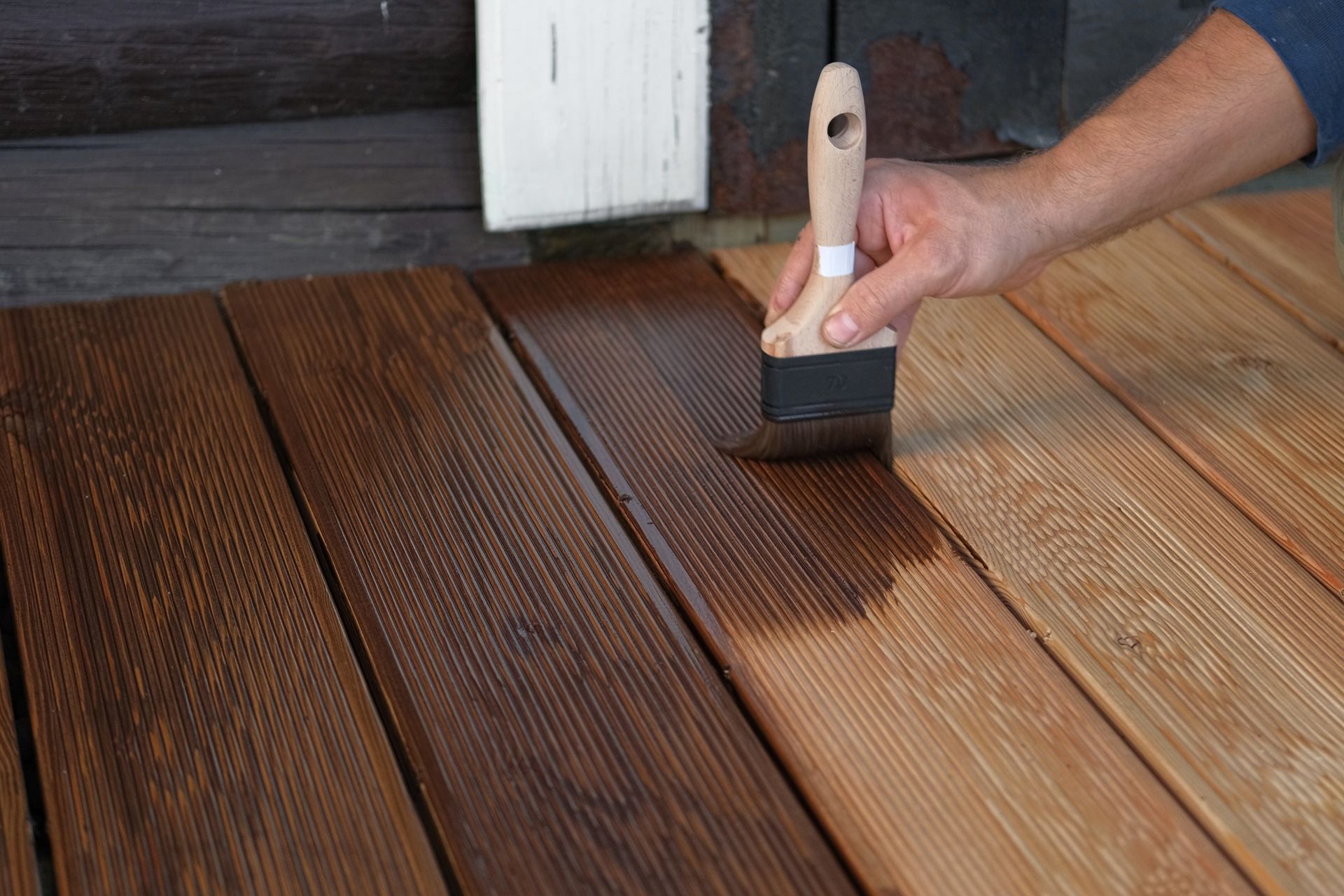
Professional wood restoration begins with controlled power washing that removes contaminants without raising wood fibers or forcing water deeper into the material. The surface is then allowed to dry completely before stain application, ensuring proper absorption and adhesion. Stain color options range from transparent finishes that showcase natural wood grain to solid colors that provide maximum UV protection, with semi-transparent formulas offering a balance between the two.
Once the work is finished, you notice wood that feels smooth rather than rough, displays consistent color without gray patches or dark streaks, and sheds water instead of absorbing it. Rain beads up and rolls off sealed surfaces rather than soaking in, preventing the swelling and shrinking cycles that cause boards to crack and fasteners to loosen. The finish also stops UV radiation from breaking down lignin, the natural polymer that binds wood fibers together, which is what causes untreated wood to turn gray and become brittle over time.
The restoration process includes evaluating existing damage such as loose boards, protruding nails, or areas where previous coatings have peeled, addressing these issues before refinishing to ensure the new protective layer performs as intended. Establishing a maintenance schedule based on sun exposure, traffic patterns, and local weather conditions helps determine when reapplication is needed, typically every two to four years depending on finish type and environmental factors.
What Homeowners Ask About Wood Maintenance
Wood decks and fences throughout Charlotte face constant exposure to moisture, sunlight, and temperature swings that gradually degrade unprotected surfaces. The questions below address common concerns about the cleaning, staining, and sealing process.
What does power washing actually remove from wood surfaces?
The process eliminates dirt embedded in wood grain, green and black algae that thrive in Charlotte's humidity, mildew colonies that appear as dark spots, and old stain or sealer that has broken down and is no longer providing protection.
How do I choose between transparent, semi-transparent, and solid stain finishes?
Transparent stains allow full wood grain visibility but offer the least UV protection, solid stains provide maximum sun blocking but hide grain patterns completely, and semi-transparent options show grain while adding moderate color and UV resistance.
When should wood be refinished rather than just cleaned?
If water no longer beads on the surface and instead soaks in immediately, if wood has turned gray despite previous staining, or if you see checking cracks and raised grain texture, the protective coating has failed and refinishing is necessary rather than cleaning alone.
Why does sealing prevent wood rot and structural damage?
Sealers create a moisture barrier that stops water from penetrating wood fibers, preventing the wet-dry cycles that cause dimensional changes, and blocking the sustained moisture conditions that allow decay fungi to colonize and break down cellulose.
How often do horizontal and vertical surfaces need reapplication?
Horizontal deck boards exposed to direct sun and standing water typically require refinishing every two to three years, while vertical fence boards that shed water more readily and receive less traffic often last three to four years between treatments.
Premier Fencing & Decking Solutions evaluates your outdoor wood surfaces and recommends cleaning and finishing treatments based on current condition and exposure levels. Contact us to arrange an inspection and establish a maintenance plan that prevents accelerated deterioration.